
0 results
Capex Mn USD
Job Creation
Developments in Qatar
Stay informed about the most recent developments in Qatar, covering laws and regulations updates, new services and the influential factors shaping Qatar's flourishing business environment.

Tasklink Launched as Smart Platform for Hiring Technical Talent and Freelancers
As the digital business environment continues to evolve at a rapid pace, Tasklink has been launched as a specialised smart digital platform focused on hiring technical professionals and freelancers.
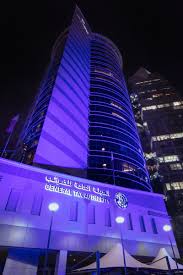
General Tax Authority Announces the Implementation of Global and Domestic Minimum Tax
As part of its ongoing efforts to align the national tax system with international best practices, the General Tax Authority announces the commencement of the implementation of Chapter Seven (Repealed and Re-enacted) of the Income Tax Law issued under Law No. (24) of 2018 and its amendments, which sets out the rules for applying the global and domestic minimum tax, thereby enhancing the principles of transparency and fairness in the tax system.

CRA Issues Updated Qatar National Frequency Allocation Plan
The Communications Regulatory Authority (CRA) announced the issuance of an updated version of the Qatar National Frequency Allocation Plan (QNFAP), which includes updates that keep pace with the rapid developments in the Information and Communications Technology (ICT) sector, particularly in the field of radio communication services.

QDB-backed Utopia Studio Announces Full-stack AI Package to Accelerate Startup Development and Commercialisation
The Utopia Studio, a Qatar Development Bank (QDB) supported AI (artificial intelligence)-native venture studio operating as part of Utopia Capital Management’s venture platform, has signed a pact with Sytronix, Hosted.ai, and Sia Partners, to accelerate AI venture building across the Middle East, Southeast Asia, Africa and other emerging markets.

Ooredoo Signs Multiple Strategic Partnerships at Web Summit to Advance Digital Transformation in Qatar
Ooredoo, Qatar's leading telecommunications provider, has signed a series of strategic Memorandums of Understanding (MoUs) during Web Summit Qatar 2026, reinforcing its position as a leading digital enabler and trusted partner for businesses and institutions across the country.
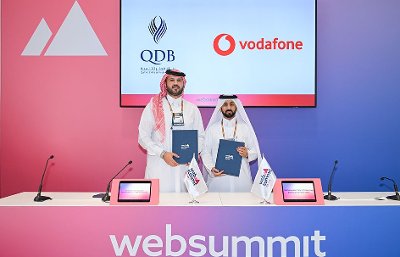
Web Summit Qatar 2026... Vodafone Qatar, QDB Sign MoU to Deliver Strategic Support for Startups, SMEs
Vodafone Qatar and Qatar Development Bank (QDB) have signed a Memorandum of Understanding (MoU) to collaborate across key strategic areas aimed at supporting startups and small and medium-sized enterprises (SMEs), with a focus on enterprise solutions, market development, and innovation.
Data Dictionary
Sector The Sector indicates what is being provided at the site of the project. This is unique to each project and while it is guided by the company involved, a company may have projects in multiple sectors.
Subsector Subsector is defined as a more specific area within a sector in which the FDI project is involved. i.e. a project may be classified as the Video Games subsector within the Software & IT Services sector.
Business Activity Describes the business activity conducted at the project, such as manufacturing, sales, extraction, construction, or R&D.
Tag Tags enable users to refine searches with additional technological and political criteria of interest, not fully covered by standard classifications. Examples range from business areas like Blockchain to current events such as Coronavirus.
Technology Level Projects are classified by Technology Level, based on definitions from the OECD, EU, and BEA:
High Tech: Significant R&D investment, cutting-edge technologies, high innovation, often involving advanced manufacturing, biotechnology, aerospace, and IT. Typically involves a high proportion of skilled labour.
Medium Tech: Combines advanced and traditional manufacturing, with moderate R&D and technology integration. Common in automotive, chemical, and machinery industries.
Low Tech: Minimal R&D, reliance on established processes, typically in labour-intensive sectors like textiles, food processing, and basic metal production.
Project Type
Greenfield (wholly-owned): A new physical project creating new jobs and investment, potentially in a new location within the country.
Reinvestment: Extension of an existing operation, adding jobs and/or investment, excluding share acquisition or new machinery installation.
Greenfield (joint-venture): A partnership where two or more companies create a new, independent business. Joint ventures are only included where they lead to a new physical presence.
New Forms of Investment (NFI): Non-equity modes where a domestic firm partners with a foreign company, involving strategic alliances, licensing, and joint ventures.
Mergers & Acquisitions (M&A): When a foreign company takes full ownership or merges with a local company through equity transfer, typically without new capital investment or job creation.
Region The source world region of a project, indicating where the ultimate parent company is headquartered.
Country The source country of a project, indicating where the ultimate parent company is headquartered.
Province Indicates the province/emirate/state where the project is located.
City Specifies the city where the project is situated.
Free zone A Free zone, or Special Economic Zone, is an area in a country that is subject to different economic regulations than other regions within the same country. The SEZ economic regulations tend to be conducive to - and attract - FDI. When a country or individual conducts business in an SEZ, there are typically additional economic advantages for them, including tax incentives and the opportunity to pay lower tariffs.
Capex Capital expenditure (capex) reflects the total investment from all involved parties. For phased investments, the initial amount is recorded.
Jobs Created This is the number of direct jobs generated by the investing company at the project site, excluding construction and supply chain jobs.
Data Sources Data is primarily gathered by fDi Markets from publicly available sources:
- Financial Times newswires and internal information
- Thousands of global media sources
- Over 2,000 industry organisations and investment promotion agencies
- Purchased data from market research firms
Each project is cross-referenced against multiple sources, with an emphasis on direct company data, including decision-making contacts. Financial Times Ltd is not responsible for the accuracy of this data.
Data Publication Data is collected in real time as announced by companies, undergoing rigorous quality control before monthly publication. Data is frequently revised as new information becomes available, including updates to jobs and investment figures.